
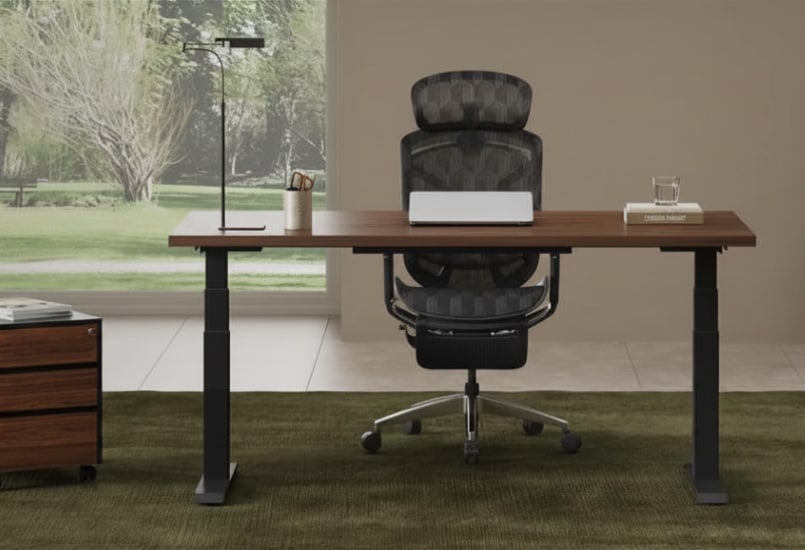
Minimalism once promised freedom through less. Fewer clothes. Fewer decorations. Fewer distractions. Clean white walls and nearly empty rooms became symbols of clarity in a noisy world. Yet something curious has happened inside modern homes and workspaces. People who once wanted smaller tables and bare corners are now investing in larger desks with drawers, storage systems, monitor stands, cable trays, and enough surface space to hold entire creative lives. The minimalist movement did not disappear. It simply grew up.
Today’s minimalist no longer wants emptiness for the sake of appearances. They want intention. They want comfort that lasts eight working hours. They want a desk that supports both focus and health. In homes where dining tables became offices and bedrooms became meeting rooms, furniture had to evolve beyond looking clean on social media. A workspace now carries the weight of daily life. It must hold laptops, chargers, notebooks, coffee cups, headphones, cameras, tablets, and sometimes even a child’s crayons beside a spreadsheet. Modern minimalists are realizing that living with less does not always mean buying small. Sometimes it means buying smarter.
That shift explains why large standing desks from FlexiSpot have become increasingly appealing to people who value simplicity. These desks are not loud or excessive. They are thoughtful. They create room for movement, organization, and peace of mind. What appears maximalist at first glance is often a deeper form of minimalism underneath. It is less clutter in the mind, less strain on the body, and fewer compromises during the workday.

Minimalism Changed From Looking Simple to Living Better
The first wave of minimalism focused heavily on appearance. Rooms became almost museum-like, with tiny desks tucked against walls and only a single lamp placed beside a laptop. The aesthetic looked calm, but real life rarely stayed that way for long. Papers piled up. Cables tangled. Necks stiffened from poor posture. The clean look often came at the cost of comfort and productivity.
People began to understand that true simplicity is not about denying your needs. It is about designing around them wisely. A larger standing desk suddenly made sense because it solved multiple problems at once. It reduced clutter by giving everything a place. It improved posture by allowing movement throughout the day. It created enough room to work without feeling boxed in by technology.
The FlexiSpot Comhar Standing Desk with Drawers captures this modern approach beautifully. Its design feels refined and calm, yet it quietly carries practical features that support daily life. The built-in drawer keeps essentials hidden without forcing people to buy extra storage units. Its wide tabletop offers enough space for both work and creativity without making the room feel chaotic. Even the integrated USB charging ports reflect a growing understanding of how people actually live today. Devices are part of modern existence, and a good desk should support them naturally instead of fighting against them.
Minimalists are also learning that comfort is not clutter. A monitor stand that saves your neck is not excess. Cable management trays are not indulgent. An anti-fatigue mat beneath a standing desk is not decorative fluff. These additions reduce physical stress and mental friction. They help people focus longer and feel better while doing it.
This shift mirrors a broader cultural change. The pandemic transformed homes into permanent hybrid spaces where work, rest, and creativity often overlap. People no longer want furniture that only looks good in photographs. They want furniture that protects their energy. A large desk becomes less about size and more about stability in a world that constantly demands attention.

Bigger Desks Create Mental Space in a Crowded Digital World
Modern work is strangely invisible. Files live in clouds. Meetings happen through screens. Entire careers exist inside laptops. Yet despite this digital shift, physical space matters more than ever. Human beings still think with their bodies. A cramped workspace can quietly increase stress levels, shorten patience, and drain concentration.
Large standing desks create what psychologists often describe as cognitive ease. When the body feels less restricted, the brain experiences less pressure. Wide desks allow people to spread out naturally instead of constantly rearranging objects. They reduce visual clutter because there is enough room to organize items intentionally rather than stacking them desperately.
The FlexiSpot Pro Plus Standing Desk E7 speaks directly to this need for stability and openness. Its strong carbon steel frame supports heavy equipment without wobbling, which may sound technical until you realize how distracting shaky furniture can become during long hours of work. Stability changes the emotional feel of a room. It creates quiet confidence.
The desk’s generous surface area also reflects how modern professionals actually operate. Many people now use dual monitors, laptops, speakers, notebooks, and charging stations simultaneously. Creative workers often shift between editing, writing, sketching, researching, and video calls in a single afternoon. Smaller desks force constant compromise. Bigger desks allow smoother transitions between tasks.
Minimalists appreciate this because true simplicity often depends on reducing friction. A workspace that functions effortlessly creates emotional calm. It means fewer interruptions, fewer tangled cables, and fewer moments wasted searching for missing items. Ironically, the larger desk becomes the tool that keeps life feeling less overwhelming.
Standing desks also support a growing awareness around health. Research continues to connect prolonged sitting with fatigue, back pain, and reduced energy. Adjustable desks encourage movement throughout the day, which improves circulation and posture while helping workers stay mentally engaged. This is one reason ergonomic furniture has moved from luxury status into mainstream conversations about wellness.
The modern minimalist is not rejecting possessions entirely. They are becoming more selective about what deserves space in their lives. Instead of buying many cheap pieces that fail quickly, they invest in one strong piece that serves multiple purposes beautifully.

The Future of Minimalism Looks More Human
Minimalism is entering a softer and more realistic era. The obsession with empty rooms is fading. People are beginning to value warmth, adaptability, and function alongside clean design. Homes are becoming more personal again. Workspaces are becoming more supportive of real human behavior rather than unrealistic ideals.
The FlexiSpot Odin 4-Leg Standing Desk E7Q reflects this future perfectly. Its expansive design encourages collaboration, creativity, and flexibility without abandoning elegance. It feels substantial without feeling heavy. In many ways, it represents a deeper understanding of what productivity truly requires. Human beings need room to think, move, and connect.
Minimalists are increasingly drawn to furniture that adapts with life instead of controlling it. A desk is no longer just a surface for a computer. It is where careers are built, ideas are tested, friendships are maintained through late-night calls, and personal goals slowly take shape. People want furniture that respects that emotional importance.
The appeal of large standing desks also comes from their longevity. Fast furniture often creates waste, frustration, and repeat purchases. Well-designed ergonomic desks offer durability and flexibility that can survive years of changing routines. A single desk can support remote work today, creative projects tomorrow, and entirely different needs years later.
This evolution says something important about modern living. People are tired of performative simplicity. They no longer want homes that look perfect but feel uncomfortable. They want spaces that breathe. Spaces that support ambition without creating stress. Spaces that feel calm without feeling empty.
Minimalists are buying maximalist desks because they finally understand that freedom is not measured by how little you own. Freedom is measured by how well your environment supports your life. A thoughtfully designed standing desk creates space not only for devices and documents, but also for focus, health, creativity, and ease. In a noisy world filled with endless distractions, that kind of spaciousness feels quietly luxurious.