
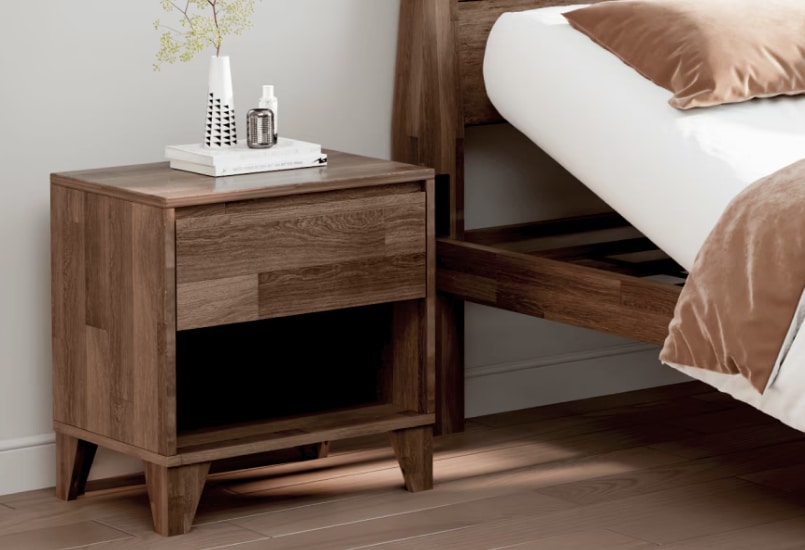
Forget astrology, personality quizzes, and first impressions. The real test of character might be hiding in a small wooden drawer beside your bed. Open it, and you may find a carefully arranged collection of nighttime essentials, a tangle of outdated cables, or three half-empty lip balms competing for space. A nightstand seems like an ordinary piece of bedroom furniture, but its drawer can reveal surprisingly familiar truths about how we organize, prepare, and live.
Unlike a multi-drawer nightstand, which allows clutter to spread across several compartments, a single-drawer nightstand creates a small but fascinating challenge. Every item must earn its place. What stays, what goes, and what gets buried at the back can tell a story about your habits, priorities, and relationship with clutter. Consider this your unofficial personality test, with a little furniture psychology and a healthy dose of humor.
The Scarcity Principle: The 1.5-Cubic-Foot Crucible
Limited space has a way of making decisions for us. When a bedside drawer has room for only a modest collection of belongings, every object competes for a place. Your phone charger seems essential, but so does the notebook you swear you will use every evening. Eventually, something must go, or the drawer becomes a miniature storage crisis.
This is the curious tension of minimalist furniture. A simple exterior suggests a calm, uncluttered bedroom, yet the space behind that smooth front may hold an increasingly complicated inventory. Stacking items vertically only adds to the challenge. Pull out a charging cable, and suddenly a collection of loose pens, receipts, and forgotten accessories threatens to collapse. A small drawer teaches a useful lesson: organization is less about owning less and more about knowing what deserves space.
--altImgStart--{"link":"https://s3.springbeetle.com/prod-us2-bucket/KanaOne-DrawerNightstandwithopendrawers_20261021_ic7NyWU9.png","alt":"Kana One-Drawer Nightstand with open drawers"}--altImgEnd--
The Archetypes: What Your Single Drawer Says About You
1. The Pragmatic Prepper
A flashlight, earplugs, spare glasses, tissues, and melatonin occupy every available corner. You are prepared for almost anything that might interrupt a peaceful night, including a power outage, a noisy neighbor, or the sudden realization that you cannot find your glasses. Practicality guides your decisions, and you prefer having what you need within arm's reach.
Your drawer reflects the value of preparation, although it might also suggest that you find comfort in anticipating problems. The trick is knowing when preparation becomes unnecessary accumulation. Keeping useful essentials close makes bedtime easier, but regularly checking expiration dates and removing duplicates ensures your emergency supplies remain genuinely helpful.
2. The Intellectual Pretender
Inside your drawer rests a literary classic, an expensive gel pen, and a beautiful journal containing exactly three entries. A bookmark marks your progress somewhere around page 40, where it has remained for months. You have excellent taste in stationery and ambitious plans for your evening reading routine.
Your collection represents something more interesting than laziness: the difference between the person you hope to become and the habits you practice today. Aspirational purchases can make a future routine feel real before it becomes part of everyday life. Instead of judging yourself, make the routine easier. Keep one book, one pen, and your journal accessible. A smaller collection can turn good intentions into actual reading time.
3. The Digital Hoarder
Four tangled cables, an aging tablet, two powerless portable chargers, and a smartwatch cord from an old device share your drawer. You cannot remember the last time you used half of them, but throwing them away feels risky. What if you need that particular connector next month?
Technology changes quickly, leaving behind a trail of accessories that once seemed indispensable. Keeping a few compatible cables and a working backup charger makes sense, but obsolete electronics can consume valuable space. Sort accessories by the devices you currently own, test the items that still work, and recycle unwanted electronics through appropriate collection programs. Your future self will appreciate having a charger that works instead of a museum of charging possibilities.
4. The Chaos Goblin
A single earbud, three half-empty lip balms, old receipts, a mysterious screw, and loose cough drops form the unofficial inventory. You know the drawer is disorganized, but you can usually find what you need after a brief search. Sometimes, you discover something you forgot you owned, which feels like receiving a tiny gift from your past self.
Your approach favors convenience over structure. That is not automatically a problem, provided clutter does not interfere with your daily routine. Still, small objects accumulate faster than expected when nothing has a designated home. Empty the drawer, group similar items, and discard anything broken or unnecessary. You do not need perfect organization. You simply need a system that makes finding your lip balm less like an archaeological expedition.
--altImgStart--{"link":"https://s3.springbeetle.com/prod-us2-bucket/nightstandbesidethebed_20261021_tT8Rtt9G.png","alt":"nightstand beside the bed"}--altImgEnd--
The Nightstand Top Versus the Drawer
The top of a nightstand often presents the bedroom you want people to see. An elegant lamp, a water carafe, and a carefully chosen book suggest a peaceful evening routine. The drawer, meanwhile, holds the less polished details of everyday life. It is where spare batteries, charging cables, and miscellaneous belongings disappear when the bedroom needs a quick tidy.
This contrast reflects a familiar habit: we organize visible spaces first because they shape the impression a room creates. Yet hidden clutter still occupies physical space and can make everyday tasks harder. A useful approach is to give both areas a purpose. Keep frequently used items on top and less frequently needed essentials inside. When each object has a logical home, your bedroom becomes easier to maintain without sacrificing its style.
The Partner Compatibility Test
Sharing a bedroom introduces a new challenge: two people may have very different ideas about bedside organization. The Pragmatic Prepper wants spare tissues, a flashlight, and everything arranged neatly. The Chaos Goblin prefers a flexible collection of whatever might come in handy. Put them together, and a single drawer can become an unexpected source of negotiation.
Storage space also creates a subtle question of fairness. One partner might have a roomy drawer filled with carefully arranged essentials, while the other struggles to fit a charging cable beside a collection of old receipts. The solution is not to declare one personality superior. Instead, agree on what belongs in shared spaces, give each person reasonable storage, and review the contents occasionally. A well-organized bedroom should support both people's routines rather than force them into identical habits.
--altImgStart--{"link":"https://s3.springbeetle.com/prod-us2-bucket/KanaOne-DrawerNightstandinoak_20261021_XlwJbF77.png","alt":"Kana One-Drawer Nightstand in oak"}--altImgEnd--
Meet the FlexiSpot Kana One-Drawer Nightstand
If your bedside storage needs a practical reset, the FlexiSpot Kana One-Drawer Nightstand offers a thoughtful balance of style, function, and simplicity. Made from solid wood with a protective finish, it brings natural warmth to the bedroom while providing a sturdy place for everyday essentials. Its smooth, waterproof surface makes routine cleaning easier, while adjustable foot pads help maintain stability across different floor types.
The single-drawer design includes one spacious drawer and an open shelf, creating two convenient places to organize belongings. Keep private items tucked away while placing books or frequently used accessories on the shelf. Bureau Veritas-certified drawer slides support smooth access, and sturdy wooden legs provide dependable support. Best of all, the nightstand arrives fully assembled, saving you the time and effort of putting furniture together.
The Kana collection offers oak and walnut finishes, along with single-drawer and double-drawer configurations. That choice makes it easier to match your bedroom's style and storage needs. If you prefer a streamlined bedside setup, the single-drawer version encourages thoughtful organization without making the room feel crowded.
The Final Verdict: Open the Drawer
A single-drawer nightstand cannot reveal your entire personality, of course. A messy drawer does not make you irresponsible, and a perfectly arranged one does not guarantee that the rest of your life follows the same pattern. Still, this small space offers a useful glimpse into how you handle limited resources, daily routines, and the belongings you keep close.
The real lesson is not to achieve a flawless drawer. It is to make room for the things that genuinely serve you. Choose furniture that supports your habits, establish a simple organization system, and clear out items that no longer belong.
Tonight, open your bedside drawer and take a look. Are you prepared for tomorrow, holding on to yesterday, or simply managing three different lip balms and a tangled cable? Whatever you find, consider it an invitation to make your smallest space work a little better for you.