
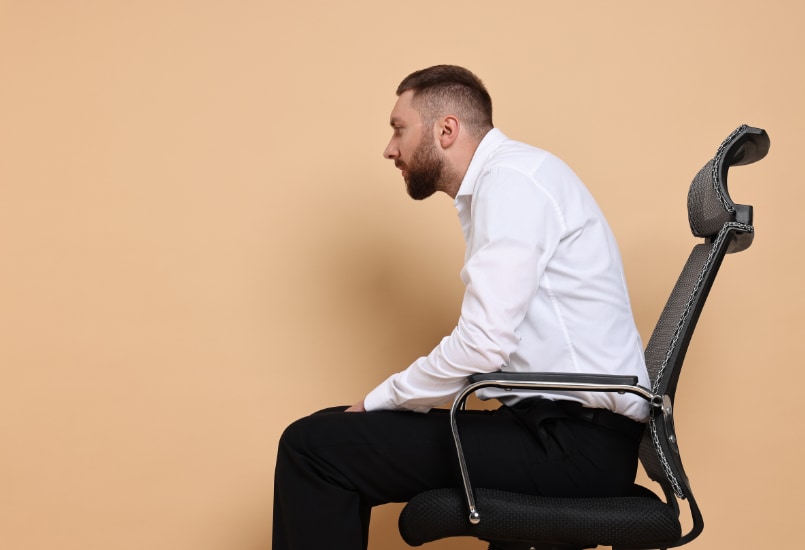
Halloween monsters disappear when October ends, but the frightening curve of your neck can follow you all year. While horror movies give us haunted houses and midnight screams, the modern office has its own collection of nightmares: aching shoulders, stiff necks, and backs that protest after hours of sitting. Your desk might look harmless, but spending 40 hours or more each week in a poorly arranged workspace can encourage habits that strain your body. Unlike movie monsters, these problems rarely announce themselves. They creep in through small, repeated movements until discomfort becomes routine. The real fright? Your workspace could be part of the problem.
--altImgStart--{"link":"https://s3.springbeetle.com/prod-us2-bucket/hunchbackposturewhileworking_20261029_iXtjWdzg.png","alt":"hunchback posture while working"}--altImgEnd--
The Casting Call of Desk-Bound Horrors
Meet the Hunchback, the Vulture, and the Zombie Stare, three familiar characters in the office of bad posture. The Hunchback appears when you round your upper back to reach your screen. The Vulture emerges when your head drifts forward, forcing your neck muscles to work harder to support it. The Zombie Stare completes the picture, with raised shoulders, clenched jaws, and tired eyes fixed on a monitor. These positions may feel natural after hours of concentration, but repetition matters. Poor desk ergonomics can increase muscle strain and discomfort. Your body is not designed to remain frozen in one position throughout the workday.
The Jump Scares of Poor Posture
The first warning signs often arrive quietly. Your neck feels tight, your shoulders ache, and your lower back begins complaining before lunchtime. Slouching can also restrict comfortable chest expansion, making deep breathing feel more difficult. Meanwhile, prolonged sitting and static muscle contractions can contribute to fatigue, leaving you sluggish when your workload demands focus. These symptoms have several possible causes, so poor posture is not always the sole culprit. However, an uncomfortable workstation can make matters worse. Instead of ignoring recurring aches or treating them as ordinary office life, examine your screen height, chair support, and sitting habits. Small adjustments can make daily work more comfortable.
--altImgStart--{"link":"https://s3.springbeetle.com/prod-us2-bucket/manwithshoulderpain_20261029_G0B6Sl5a.png","alt":"man with shoulder pain"}--altImgEnd--
The Long-Term Curse
The scariest part of desk-related discomfort is how easily temporary habits become permanent routines. Prolonged sitting and awkward positions can contribute to recurring neck and back pain, while reduced movement may increase stiffness. Spinal discs naturally change with age, and posture alone does not automatically cause disc damage or pinched nerves. Likewise, a rounded upper back, sometimes associated with kyphosis, can develop for different reasons, including age-related changes and certain medical conditions. Persistent changes deserve professional assessment rather than frightening online diagnoses. The good news is that movement, appropriate exercise, and a better workstation can support spinal health. Your body needs regular care, not endless hours of stillness.
The Exorcism: Banish the Slouch Monster
Start your posture reset by bringing your monitor to approximately eye level, keeping your feet supported, and positioning your keyboard and mouse within easy reach. Your elbows should rest comfortably near your sides, reducing unnecessary shoulder tension. If your desk cannot adjust to your needs, a supportive chair or footrest may help. Next, introduce a simple movement ritual. Every 30 minutes, change positions, stand briefly, or walk around when practical. Gentle chin tucks, doorway chest stretches, and shoulder blade squeezes can also encourage comfortable movement. Stop any exercise that causes pain. Remember, good posture is not a rigid pose. Regular movement and comfortable positioning matter more.
--altImgStart--{"link":"https://s3.springbeetle.com/prod-us2-bucket/manstandingwhileusingFlexiSpotE7Pro_20261029_WjhfUAbG.png","alt":"man standing while using FlexiSpot E7 Pro"}--altImgEnd--
Meet Your Workspace's New Ally: FlexiSpot E7 Pro
A healthier workstation begins with equipment that adapts to your needs. The FlexiSpot E7 Pro Premium Standing Desk offers a practical way to alternate between sitting and standing without sacrificing stability. Its adjustable height makes it easier to change positions throughout the day, while four programmable memory presets let you save your preferred desk heights. The dual motors provide smooth, quiet adjustments, helping minimize distractions during work. With a reported 440-pound load capacity, the desk can accommodate substantial workstation setups, including multiple monitors and other equipment. Rather than forcing your body to accommodate one fixed position, the E7 Pro helps make workspace adjustments part of your everyday routine.
Built for Stability, Designed for Daily Demands
A standing desk should feel dependable whether it sits low for seated work or rises for standing tasks. The E7 Pro uses a pyramid-style rectangular column design, reinforced footplates, and industrial-grade steel to support stability. Its reinforced frame features wider column overlaps, thicker steel walls, and symmetrical dual beams designed to provide a steady foundation. FlexiSpot also reports that the desk has undergone testing for more than 30,000 lifting cycles, demonstrating its focus on repeated daily use. Its stated 440-pound capacity provides room for monitors, computers, books, and other work essentials, although the actual setup should remain within the manufacturer's guidelines. Reliable construction helps make movement a practical part of your workday.
A Cleaner Desk and a Safer Workday
Clutter can turn a comfortable workstation into an obstacle course of tangled cables and misplaced accessories. The E7 Pro addresses this problem with cable management options, including a tray, clips, grip tape, and a magnetic cover. Its memory keypad also includes a charging port, keeping height adjustments and device charging conveniently accessible. Safety features include a keypad lock to help prevent accidental operation and anti-collision technology designed to stop or reverse movement when an obstacle is detected. Installation is another consideration: FlexiSpot advertises a streamlined setup that can take approximately 15 minutes under suitable conditions. Always follow the supplied instructions, particularly when assembling the frame and securing the desktop.
Thoughtful Design for a More Comfortable Workspace
Beyond its sturdy frame, the E7 Pro features a seamless desktop designed for everyday use. Its smooth surface is easy to clean, while its construction is intended to resist bending and deformation under appropriate conditions. FlexiSpot also offers accessories that let users customize their workstations according to their equipment, storage needs, and preferred layout. These details can help create a more organized environment where essential items remain within reach. However, even a well-equipped desk works best when paired with suitable monitor placement, supportive seating, and regular movement. The goal is not to create a picture-perfect office but to build a practical workspace that supports comfort, concentration, and changing needs throughout the day.
Conclusion: Surviving the Workday
Halloween ends, but your working habits continue long after the decorations return to storage. Fortunately, you do not need a dramatic office makeover to begin protecting your comfort. Start by adjusting your screen, moving regularly, and paying attention to the signals your body sends. A height-adjustable desk like the FlexiSpot E7 Pro can make these changes easier by allowing you to alternate between sitting and standing. Its sturdy frame, adjustable height, and convenient controls offer a useful foundation for a flexible workspace. Equipment alone cannot eliminate discomfort, but thoughtful design and healthier habits can work together. Before reading another sentence, straighten comfortably, relax your shoulders, and take a short movement break. Your spine deserves better than a horror story.