
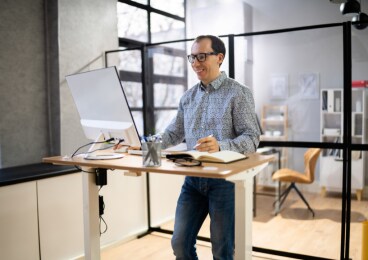
The first hour feels longer than it is, arriving with a quiet shock when you begin using a standing desk. Your legs feel unsure, your feet begin to notice the floor, and your focus drifts in and out like a radio searching for a clear signal. You might wonder if this was a mistake. It is not. What you are feeling is your body waking up to a new rhythm. Sitting has trained your muscles to rest for long stretches, and now they are being asked to work again in small, steady ways. This shift can feel strange, even uncomfortable, but it is a sign of change, not failure. The key is to lower your expectations for that first hour. You are not aiming for perfection. You are learning a new way to work. Start with short standing intervals and allow your body to adjust without pressure. A standing desk is not about standing all day. It is about moving more often. When you remove the idea that you must endure it, the experience softens. The first hour becomes less about discomfort and more about discovery.

Set Your Desk Like It Matters
A standing desk only works as well as the way it is set up. Height is everything. Your screen should meet your eyes without forcing your neck to tilt up or down. Your elbows should rest at a gentle ninety degree angle, close to your body, relaxed and natural. When your setup is off, even by a little, your body pays for it. This is often why beginners give up too soon. They think standing is the problem, when in truth it is the setup. Investing in a reliable desk like a FlexiSpot standing desk can make this process smoother, since it allows easy adjustments that match your height and posture throughout the day. Your keyboard and mouse should sit at a level where your wrists stay straight, not bent. Your feet should feel grounded, not strained. When your desk is set with care, your body responds with ease. Standing begins to feel less like effort and more like balance.
Learn the Rhythm of Sit and Stand
The biggest mistake beginners make is trying to stand for too long. Standing desks are not a test of endurance. They are a tool for balance. Think of your day as a gentle wave between sitting and standing. You rise for a while, then you settle back down, then you rise again. This rhythm keeps your body engaged without pushing it too far. A simple pattern can help you start. Try standing for twenty minutes, then sitting for forty, then repeating the cycle. Over time, you can adjust this based on how you feel. Some days you will stand more. Some days less. That is fine. What matters is that you keep moving. FlexiSpot standing desks are designed to support this kind of flow, allowing you to shift positions with ease instead of treating it like a task. When movement becomes part of your routine, your energy levels begin to change. You feel less stiff, less tired, and more present. The goal is not to replace sitting. The goal is to break it up.

Your Feet and Legs Need Attention, Too
When people think about desk work, they often focus on the back and shoulders. But when you begin standing, your feet and legs take on a new role. They become your foundation. If they are uncomfortable, everything else follows. This is why footwear matters more than you might expect. Standing barefoot on a hard floor can feel fine at first, but over time it can lead to fatigue. Supportive shoes or cushioned mats can reduce strain and keep you steady. Small movements also help. Shift your weight from one foot to the other. Take a step back, then forward. Bend your knees slightly now and then. These tiny actions keep your blood flowing and prevent stiffness from settling in. You do not need a full workout at your desk. You just need motion. When your lower body feels supported, your upper body can relax. This creates a chain reaction of comfort that makes standing easier to maintain. The experience becomes less about holding a position and more about staying gently in motion.
Focus Improves When Your Body Feels Good
One of the quiet benefits of a standing desk is how it can sharpen your focus. At first, it may feel like a distraction. You are aware of your posture, your feet, your balance. But as your body adapts, something shifts. You begin to feel more alert. Your mind follows your body’s lead. Movement brings a sense of energy that sitting often dulls. This does not mean you will suddenly become more productive overnight. It means you are creating conditions that support better work. A well designed setup, like those offered by FlexiSpot standing desks, allows you to move without breaking your flow. You can adjust your height in seconds, stretch briefly, then return to your task. Over time, these small changes add up. You may notice fewer afternoon slumps and less mental fog. Focus becomes less about forcing yourself to concentrate and more about removing the things that make it hard. When your body feels supported, your mind can stay engaged.

Build a Habit You Can Keep
The success of a standing desk does not come from a single day. It comes from what you repeat. The goal is to build a habit that fits your life, not one that disrupts it. Start small and stay consistent. Even a few standing sessions each day can make a difference if you keep them going. Listen to your body as you adjust. If something feels off, change it. Raise your desk a little. Lower it. Shift your schedule. This flexibility is what makes standing desks sustainable. FlexiSpot standing desks are designed with this in mind, offering smooth transitions that encourage regular use instead of resistance. Over time, standing becomes less of a choice and more of a natural part of your routine. You stop thinking about it. You simply do it. That is when the real benefits begin to settle in. Your posture improves. Your energy steadies. Your work feels more comfortable. It is not about forcing a new habit into your day. It is about shaping your day so that the habit fits with ease.