
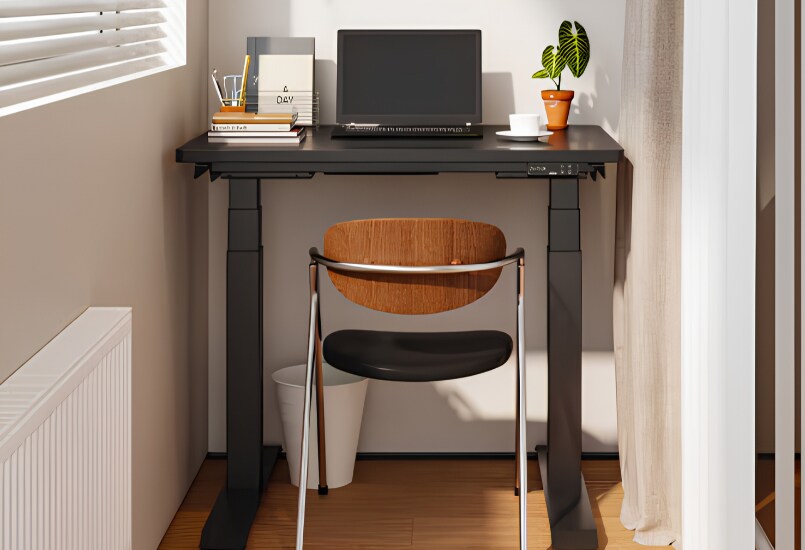
Modern apartment living has a peculiar way of redefining personal space. A home office might be a narrow gap between the bed and bookshelf, a corner beside the refrigerator, or a closet that once held winter clothes. When every inch matters, setting up a productive workspace can feel like solving a complicated puzzle. Naturally, many people assume a small desk means sacrificing quality, stability, and comfort. They picture thin frames, weak motors, and monitors that shake with every keystroke. However, a compact workspace does not have to deliver a compact working experience. With smart planning, vertical storage, and a sturdy adjustable desk like the FlexiSpot E7-Mini, even the smallest corner can support serious productivity.
--altImgStart--{"link":"https://s3.springbeetle.com/prod-us2-bucket/FlexiSpotE7miniincornerbedroom_20261127_iJVdJoiT.png","alt":"FlexiSpot E7 mini in corner bedroom"}--altImgEnd--
Hack #1: Claim Unlikely Territory (The "Cloffice" and Beyond)
Turn an Unused Closet Into an Office
Closets are excellent at hiding things, but they can also hide a surprisingly useful workspace. The growing cloffice trend, which combines a closet and an office, gives unused storage areas a practical second purpose. A compact standing desk frame like the FlexiSpot E7-Mini makes this arrangement easier, especially with its 32" × 24" and 42" × 24" desktop options. These sizes can fit into narrow spaces while providing room for essential equipment. Add a comfortable chair, a monitor, and focused lighting, and an ordinary closet becomes a functional workstation. When the workday ends, close the doors and reclaim your living space.
Make Corners Work Harder
Not everyone has a spare closet, but almost every home has an overlooked corner. The narrow space beside a sofa, an unused bedroom wall, or an awkward alcove can accommodate a compact desk without taking over the room. Before choosing a location, measure its width and depth, then consider how people move through the area. A workstation should never block doors, drawers, or everyday walkways. Once the desk is positioned, look upward. Clamp-on monitor arms, floating shelves, and wall-mounted organizers keep supplies off the desktop. This simple arrangement creates a more usable room while making the entire workstation feel less crowded.
Hack #2: Ditch the Wobble (Why Frame Strength Matters in Tight Spots)
Small Desks Still Need Serious Support
One common mistake when furnishing a tiny office is choosing a desk based entirely on its size and price. Compact models can look convenient, but poorly constructed frames may shake whenever someone types, adjusts a monitor, or changes position. At standing height, that movement can become especially distracting. A constantly wobbling screen makes reading difficult and interrupts concentration. Stability matters in small workspaces because everything sits closer together, leaving less room to separate equipment or compensate for movement. A dependable desk should provide a steady foundation, regardless of its dimensions. Saving floor space should never mean accepting an uncomfortable or unreliable workstation.
Choose a Frame Built for Everyday Work
The FlexiSpot E7-Mini addresses this concern with a reinforced, industrial-grade steel frame designed to provide dependable support. Despite its compact footprint, it carries the heavy-duty stability associated with the E7 series. That construction matters when a workstation needs to accommodate a laptop, monitor, keyboard, and other everyday equipment. A sturdy frame helps keep screens steady during typing and routine desk adjustments, making focused work more comfortable. It also gives users greater confidence when switching between sitting and standing. Rather than treating a small desk as temporary furniture, think of it as a daily investment. Strong construction makes limited space more practical.
--altImgStart--{"link":"https://s3.springbeetle.com/prod-us2-bucket/FlexiSpotE7miniatdifferentheights_20261127_KkndTsDS.png","alt":"FlexiSpot E7 mini at different heights"}--altImgEnd--
Hack #3: Automate Your Posture Shifts
Break Up Long Hours of Sitting
Working from a cramped corner can make the afternoon feel longer than it really is. When a desk stays at one height all day, users may remain seated for hours without noticing how little they move. Changing positions throughout the day can introduce more movement into an otherwise sedentary routine. A height-adjustable desk makes that change easier because users can alternate between sitting and standing without rearranging their entire workstation. Standing does not need to replace sitting completely. Instead, both positions can become part of a more flexible workday. The goal is to avoid remaining in one posture for too long.
Let Memory Presets Handle the Adjustment
The FlexiSpot E7-Mini features programmable memory presets that make changing desk height simple. Instead of manually adjusting the workstation every time, users can save preferred sitting and standing heights and return to them with a button press. This convenience helps maintain momentum, particularly when switching tasks or preparing for a video meeting. Try connecting posture changes to everyday activities. Standing while answering emails, reviewing documents, or joining shorter calls can create natural opportunities to move. Sitting may feel more suitable for longer writing sessions or detailed computer work. These small adjustments make movement easier to maintain without turning the workday into a complicated routine.
Hack #4: Make One Desk Serve the Whole Household
Build a Workspace That Grows With Everyone
When several people share a home, furniture often needs to serve more than one purpose. A desk used for professional work in the morning might become a homework station in the afternoon or a creative corner in the evening. The FlexiSpot E7-Mini offers a height range of 22.8" to 48.4", allowing different users to adjust the workstation to their needs. Its lower minimum height can be particularly useful for petite adults and growing children, while its upper range accommodates taller users. This flexibility makes one compact desk useful for different activities, ages, and working preferences without requiring additional furniture.
Give Everyone a Comfortable Setup
Sharing a workstation works best when each person can adjust it quickly and comfortably. The E7-Mini's programmable memory presets make this easier by allowing household members to save their preferred desk heights. Each user can select a setting rather than repeatedly guessing where the desktop should be positioned. For better ergonomics, adjust the chair and monitor as well. Ideally, elbows should rest comfortably near a right angle while typing, and the screen should sit at a suitable viewing height. Keep personal supplies in labeled containers or nearby storage bins. A little organization prevents shared equipment from becoming another source of daily frustration.
--altImgStart--{"link":"https://s3.springbeetle.com/prod-us2-bucket/FlexiSpotE7miniinthelivingroom_20261127_rw0L93Kv.png","alt":"FlexiSpot E7 mini in the living room"}--altImgEnd--
Small Footprint, Serious Output
A productive workspace is not measured by how many square meters it occupies. It is measured by how comfortably people can think, focus, move, and complete their work. An unused closet, an awkward bedroom corner, or a narrow living room wall can become a capable office with thoughtful planning. Vertical storage creates breathing room, a stable desk supports concentration, and adjustable height encourages healthier movement throughout the day. The FlexiSpot E7-Mini brings these practical ideas together in a compact design suited to homes where space is limited. Before assuming your apartment has no room for an office, measure that overlooked corner. You might have more workspace than you think.