
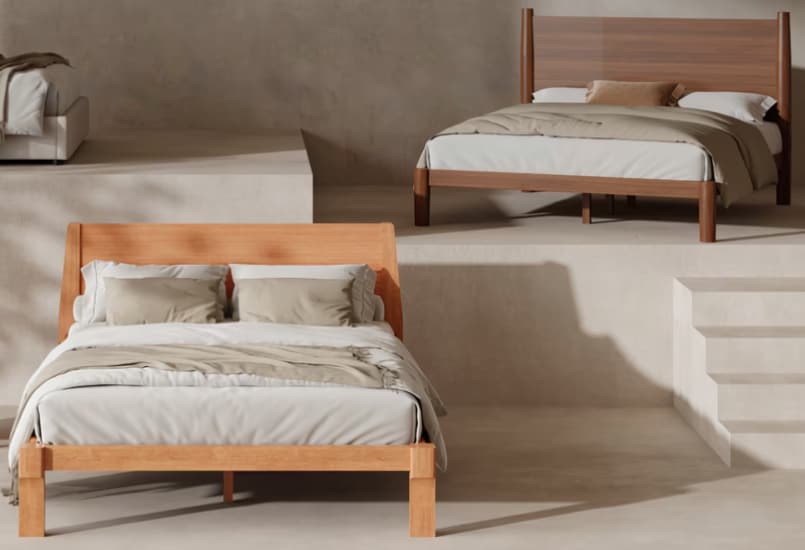
A bed can shape the mood of a bedroom before you even notice it. It sets the height of the room, changes how much floor space feels open, and quietly determines whether the space feels warm, modern, classic, or crowded. When construction is thoughtful, the bed becomes more than a place to sleep. It becomes part of the room’s daily rhythm.
That is where Japanese joinery stands out. Instead of relying on complicated hardware or bulky connections, Japanese-inspired joinery focuses on precise parts that fit together with purpose. The result can be a frame that feels sturdy, clean, and calm. But when choosing between the Kana and Kana Retro, the details matter.
Both beds share the same design philosophy, yet they serve different tastes and spaces. One leans minimalist and practical, while the other brings more traditional character and extra support. Here is how to decide which one belongs in your bedroom.
What Makes Japanese Joinery Construction Different?
Japanese joinery is rooted in the idea that strong furniture does not need to look complicated. Instead of depending entirely on visible fasteners, joinery uses carefully shaped pieces that connect securely. For a bed frame, that approach can create a cleaner appearance while helping the structure remain stable during everyday use.
The benefit is not only visual. A well-designed joinery bed can be easier to assemble, disassemble, and move when your living situation changes. That matters more than it sounds. Anyone who has tried to move a heavy bed through a narrow doorway knows that furniture becomes much less charming when it refuses to come apart.
The Kana and Kana Retro both use cross-shaped joinery designed to create tight connections. These joints help reduce unwanted movement and create a more secure frame. A stable structure can also mean fewer annoying sounds when you turn over at night.
This construction reflects a simple principle: precision can create strength without adding visual clutter. The result is furniture that feels considered rather than overbuilt. For bedrooms where calm matters, that balance can make a noticeable difference.
--altImgStart--{"link":"https://s3.springbeetle.com/prod-us2-bucket/girlreadingabookonherbed_20260810_6KHVWgnr.png","alt":"girl reading a book on her bed"}--altImgEnd--
Kana: Minimalist Design With Everyday Practicality
The Kana is the quieter choice of the two. Its minimalist design uses clean lines and a solid rubberwood construction that gives the frame a natural, understated character. If your bedroom already has simple furniture, neutral colors, or modern décor, Kana can slip into the space without competing for attention.
Its practical details are equally important. The Kana supports up to 1,500 pounds, with a reinforced cross beam and two support legs that help limit movement. Its 12 slats provide the foundation for the mattress while maintaining a straightforward structure.
One particularly useful feature is its 10.5-inch under-bed clearance. That space can become valuable storage for boxes, luggage, shoes, spare bedding, or other items that do not need to occupy your closet. It also makes cleaning underneath the bed easier because you can reach areas that might otherwise become forgotten corners.
The recessed legs allow the frame to sit snugly against a wall, which is especially useful in smaller bedrooms. Its 39-inch headboard keeps the overall profile relatively low, creating an open visual feel.
Choose Kana if you want a bed that feels modern, practical, and easy to live with.
--altImgStart--{"link":"https://s3.springbeetle.com/prod-us2-bucket/womanreadingabookonherbedroom_20260810_XKafhFg8.png","alt":"woman reading a book on her bedroom"}--altImgEnd--
Kana Retro: More Character, More Support
Kana Retro takes the same Japanese-inspired philosophy and gives it a richer personality. Its mid-century style introduces more visual warmth, making it a natural choice for bedrooms filled with wood tones, vintage-inspired furniture, or classic décor.
The differences are not merely cosmetic. Kana Retro supports up to 1,800 pounds, giving it a higher weight capacity than Kana. It also uses three support legs and an upgraded 15-slat system, adding more structural support beneath the mattress.
Its materials give it another point of distinction. Kana Retro combines FAS-grade walnut veneer with solid wood, creating a refined surface with a tight, consistent grain. The frame uses Thailand rubberwood for the legs and a premium low-VOC finish for added durability.
Then there is the headboard. At 50 inches, it makes a stronger visual statement than Kana’s 39-inch headboard. The built-in shelf headboard also gives you a practical place for small bedroom essentials, depending on how you like to arrange your space.
Kana Retro is therefore suited to someone who wants the calm logic of Japanese joinery but prefers a warmer, more substantial bedroom presence. It feels less stripped back and more expressive without becoming overly ornate.
--altImgStart--{"link":"https://s3.springbeetle.com/prod-us2-bucket/twokanabeds_20260810_Ww87Nyo9.png","alt":"two kana beds"}--altImgEnd--
Which Bed Fits Your Bedroom Better?
Choosing between Kana and Kana Retro comes down to more than appearance. Start with the room itself. If you have a compact bedroom and want furniture that visually recedes into the background, Kana has an advantage. Its lower headboard and minimalist profile can help the room feel more open.
Kana also makes sense when under-bed storage is a priority. The 10.5-inch clearance gives you room to make better use of the floor area without adding another cabinet or storage unit.
Kana Retro works differently. Its taller headboard and mid-century styling give the bed greater visual weight. In a larger bedroom, that can be exactly what you want. Rather than leaving a large wall feeling empty, the taller headboard creates a natural focal point.
Consider your mattress and sleeping setup, too. Both frames offer substantial support, but Kana Retro’s higher 1,800-pound capacity, three support legs, and 15 slats make it the more robust option on paper.
The choice is ultimately about balance. Kana prioritizes simplicity, space efficiency, and a minimalist look. Kana Retro adds stronger visual character, additional support, and more premium material details. Neither is automatically better. The better choice is the one that matches how you use your room.
Kana or Kana Retro: Which One Should You Choose?
The easiest way to decide is to imagine your bedroom five years from now. Will you still want a simple frame that blends easily with changing décor? Or do you want a substantial wooden bed that gives the room a distinct identity?
The Kana is the sensible choice for a modern bedroom where space, storage, and clean design are important. Its solid rubberwood construction, 1,500-pound weight capacity, recessed legs, 10.5-inch under-bed clearance, and minimalist silhouette make it practical without feeling ordinary. It is especially appealing for apartments, compact bedrooms, and anyone who prefers furniture with a quiet presence.
The Kana Retro, meanwhile, is the stronger choice for those who want more character and structural capacity. Its 1,800-pound weight capacity, three support legs, 15 upgraded slats, 50-inch headboard, walnut veneer and solid wood construction, and mid-century style give it a more substantial personality.
Both demonstrate why Japanese joinery bed frames remain appealing. They bring together precision, stability, simplicity, and thoughtful design rather than relying on unnecessary complexity.
If your ideal bedroom feels airy and modern, choose Kana. If you want warmth, craftsmanship, and a stronger statement, choose Kana Retro. Either way, the best bed is the one that makes the room feel naturally settled, as if every piece has found its proper place.