
Your desk is more than a surface for your laptop. It is the center of your workspace, where ideas become emails, reports, designs, and finished projects. The way you arrange it can quietly shape how you focus, move, organize tasks, and manage energy throughout the day. A thoughtful desk layout reduces small interruptions, while a cluttered setup can make simple tasks feel harder. Good workspace organization gives every essential tool a purpose and place, creating a smoother workflow. The goal is not a picture-perfect desk, but a productive workspace that supports your habits, comfort, attention, and movement from the first task to the last.
--altImgStart--{"link":"https://s3.springbeetle.com/prod-us2-bucket/manfocusedatwork_20260918_o7EldGbO.png","alt":"man focused at work"}--altImgEnd--
Your Desk Layout Can Direct Your Focus
Your attention is valuable, and your desk organization can quietly influence where it goes. Everything within your line of sight competes for some level of attention, from an overflowing stack of papers to a second monitor filled with notifications. At the same time, the tools you use most often need to stay within easy reach. An effective desk layout balances accessibility, order, and visual simplicity.
Start by considering what you use during a typical workday. Your monitor, keyboard, mouse, notebook, phone, headphones, and documents should each have a logical place. When frequently used items are easy to find, you spend less time searching and more time working. A well-planned office desk setup can make your workflow feel smoother without requiring major changes.
Your monitor is especially important in an ergonomic desk setup. Position it where you can view the screen comfortably without constantly turning your head, leaning forward, or straining your neck. If you use multiple monitors, place your primary display directly in front of you and position secondary screens where they can support communication, reference work, or other tasks.
Your keyboard and mouse also deserve careful placement. Keep them close enough for natural movement without unnecessary reaching. A notebook can remain nearby for quick notes, while items you rarely use can move farther away.
Do not overlook empty desktop space. A clear area gives you room to write, review documents, organize materials, or think through a problem without first moving everything else. In a productive workspace, open space is useful space.
This is why workspace organization is about more than keeping your desk looking clean. It reduces small sources of friction. Every unnecessary reach, search, or adjustment interrupts your workflow.
The best desk setup should reflect your habits. Notice what you reach for most, what repeatedly gets in your way, and where your eyes naturally go. Your desk is already directing your attention. A thoughtful layout simply helps direct it toward the work that matters.
--altImgStart--{"link":"https://s3.springbeetle.com/prod-us2-bucket/topviewofFlexiSpotE7L(1)_20260918_n2xJuSQU.png","alt":"top view of FlexiSpot E7L"}--altImgEnd--
More Desk Space Can Create a More Flexible Workspace
A small desk can force every task into the same limited space. Your laptop takes the center, your monitor sits beside it, and papers slowly gather around the keyboard. Before long, your home office desk setup becomes a puzzle where every new item requires moving something else.
More workspace does not automatically mean better work, but the right amount of space gives your workflow more flexibility. Instead of squeezing everything into one narrow line, you can create separate zones for different tasks. One area can support your computer, while another can hold documents, equipment, creative materials, or project supplies.
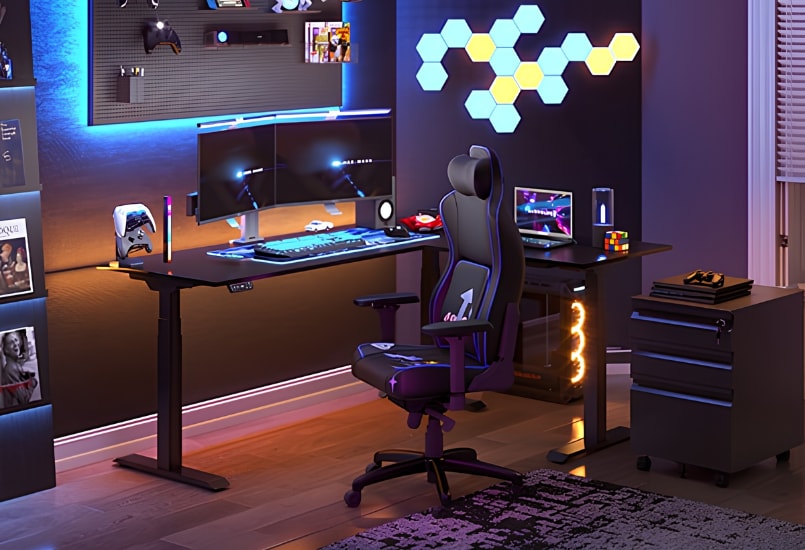
An L-shaped desk works especially well for this approach. Its extended surface allows you to divide your workspace naturally without placing everything within one crowded row. The FlexiSpot E7L Pro L-Shaped Standing Desk is designed around this flexible desk layout, offering a spacious L-shaped work surface for multiple monitors, office equipment, supplies, and ongoing projects. Its reversible panel can also be configured for left- or right-handed users, making it easier to personalize your ergonomic workspace.
The E7L Pro features an industrial-grade steel frame that supports up to 440 pounds. Its three-leg design provides stability, while the three-stage legs offer height adjustment from 25.0 to 50.7 inches. A triple motor system enables smoother adjustments, with up to three height presets available through the keypad.
The benefit of an L-shaped standing desk goes beyond extra surface area. It lets you create functional zones. Keep your primary monitor in one section and paperwork or equipment in another. Frequently used items can stay close, while less essential supplies can move farther away.
The E7L Pro is available with bamboo or black and white chipboard desktops, with 1-inch-thick surfaces made from sustainably sourced materials. It also includes a limited 15-year warranty.
The key is to make every inch serve a purpose. A larger desk should create better organization, not more clutter. When your workspace has room to breathe, your workflow can breathe with it.
--altImgStart--{"link":"https://s3.springbeetle.com/prod-us2-bucket/manstandingwhileworkingusingFlexiSpotE7L_20260918_pDtSRVUe.png","alt":"man standing while working using FlexiSpot E7L"}--altImgEnd--
An Ergonomic Desk Setup Should Work With Your Body
A desk can be beautifully organized and still leave you feeling uncomfortable by the end of the day. That is because a productive workspace is not only about where your equipment sits. It is also about how your body interacts with your desk, chair, monitor, keyboard, and other tools throughout the workday.
An effective ergonomic desk setup should support a comfortable working position. Your monitor should be easy to view without repeatedly bending your neck or leaning forward. Your keyboard and mouse should sit where your arms can move naturally without unnecessary reaching. Frequently used items should remain close, while less important equipment can move farther away. These small adjustments can make your office desk setup feel more natural and easier to use.
Desk height also plays an important role in creating an ergonomic workspace. A fixed desk gives you one working position, but your needs can change throughout the day. You may prefer sitting while writing a report, standing during a meeting, or changing positions during a long afternoon of computer work. Your workspace should have enough flexibility to accommodate those changes.
This is where a height-adjustable standing desk can make a difference. Instead of keeping your body in one position for every task, an adjustable desk gives you more freedom to change your working height. The goal is not to stand all day. It is to have the option to move between positions when it feels appropriate.
A simple height adjustment can change the relationship between your desk, chair, monitor, keyboard, and other equipment. You can raise the surface when you want to stand and lower it when you prefer to sit. This flexibility can make a workspace feel less rigid and more responsive to your daily routine.
The best ergonomic desk setup is not necessarily the one with the most expensive equipment. It is the one that fits your working habits. A sophisticated desk cannot solve problems caused by poor desk organization or an awkward layout.
Look at your workspace through the lens of movement. Where do your hands go first? Which items do you reach for repeatedly? Do you constantly move something to access your notebook? Does your monitor make you turn your head? Does your chair fit comfortably beneath the desk?
These questions reveal more about your desk setup than a photograph ever could. Your workspace should make the next action feel natural. Your keyboard should be where your hands expect it. Your monitor should sit where your eyes naturally look. Your documents should have enough room to spread out.
That is what makes thoughtful desk organization so useful. It turns the physical space around you into quiet support for your daily routine.
Ultimately, your desk layout shapes your work because it shapes the conditions surrounding it. A thoughtful arrangement can reduce distractions, improve comfort, create useful space, and make your workflow easier to follow. You do not need a perfect desk. You need a workspace designed around the way you work.