
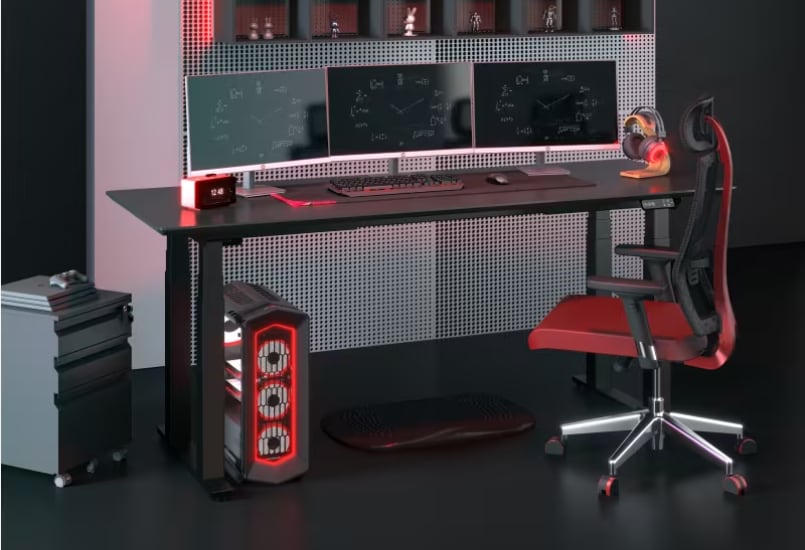
Every great workspace evolves over time. What begins with a laptop often grows into a setup filled with monitors, speakers, cameras, and other accessories, making stability just as important as performance. Many users only notice their desk when it starts to wobble during typing or while changing heights. That is where a four-leg standing desk stands apart. Built for heavier setups, it provides greater stability, better balance, and dependable support, creating a workspace that feels secure and comfortable every day.

What Is a 4-Leg Standing Desk and Why Is It Different?
At first glance, a four-leg standing desk looks familiar. It still moves smoothly between sitting and standing positions. It still encourages better posture and gives users the freedom to change positions throughout the day. The real difference reveals itself once the desk begins carrying serious weight.
A standard two-leg standing desk relies on two lifting columns placed near the center of the frame. For everyday office work with a laptop and a single monitor, this design performs well. It offers flexibility, saves space, and suits many home offices.
A four-leg standing desk approaches stability from another direction. Instead of depending on only two lifting points, it distributes weight across four independently supported legs. This creates a stronger foundation that minimizes movement across the entire desk surface. Whether typing quickly, adjusting monitor arms, or leaning against the desk while reading documents, the workspace feels noticeably more secure.
The benefits become even clearer with larger desktops. Wide work surfaces naturally encourage more equipment. Designers may use dual or triple monitors. Video editors often work with large displays, speakers, external drives, and control panels. Gamers add powerful desktop towers and accessories. Engineers may spread out multiple devices alongside paperwork. Each addition increases the demand placed on the desk frame.
Another important difference is vibration control. Every standing desk experiences some movement during height adjustment, but a well-designed four-leg frame reduces that motion significantly. Less vibration means monitors stay steadier, accessories remain secure, and users feel more comfortable during transitions.
The design also creates greater confidence when using larger desktop sizes. As desktops become wider, maintaining stability becomes increasingly challenging for conventional frames. Four support points help distribute weight more evenly across the entire surface, making larger workstations feel balanced rather than stretched.
The result is not simply a stronger desk. It is a workspace that feels calm. Instead of wondering whether another monitor or accessory might make the desk less stable, users gain the freedom to build the workstation that truly matches the way they work.

When Should You Choose a 4-Leg Standing Desk?
Not every workspace needs four legs. For someone using a lightweight laptop and a few accessories, a traditional standing desk can be an excellent choice. The decision becomes more important as equipment grows heavier and work becomes more demanding.
The first consideration is weight. Every monitor, computer, speaker, and accessory adds pressure to the lifting frame. While manufacturers publish weight capacities, stability often matters just as much as the maximum load. A desk may technically support heavy equipment yet still develop slight movement that becomes distracting during everyday use.
Desktop size also deserves careful thought. Larger desktops provide more room to organize equipment, collaborate with coworkers, or spread out creative projects. However, wider surfaces require stronger structural support. Choosing a frame designed for larger desktops helps maintain consistent stability across the entire workspace.
Another factor is the type of work performed each day. Creative professionals often move cameras, lighting equipment, and editing tools across the desk. Engineers work with multiple displays and technical devices. Streamers use microphones, cameras, mixers, and monitor arms. Professionals working from home frequently blend office work with personal hobbies on the same desk. A workstation that remains stable throughout these activities creates a smoother daily experience.
Accessory compatibility is equally important. Many people eventually want monitor arms, under-desk storage, keyboard trays, cable management systems, or charging stations. Some desk frames limit these additions because structural components occupy valuable installation space underneath the desktop. Selecting a desk that leaves room for future upgrades protects the investment over time.
Height adjustment range should not be overlooked either. Every household includes people of different heights. Some users prefer lower sitting positions, while others need taller standing heights. A desk with a broader adjustment range accommodates everyone more comfortably and adapts as workspaces evolve.
The control system also shapes everyday convenience. Programmable height presets eliminate the need for constant manual adjustments, allowing users to switch positions with a single touch. Small features like integrated charging ports can further simplify daily routines by keeping frequently used devices powered within easy reach.
Thinking ahead is often the smartest approach. Most workstations become more complex over time rather than simpler. Choosing a desk that comfortably supports future upgrades can prevent the need for another replacement only a few years later.

Why the FlexiSpot 4-Leg Standing Desk (E7 Plus) Stands Out
For users who want the strength of a four-leg design without sacrificing flexibility, the FlexiSpot 4-leg Standing Desk (E7 Plus) offers a thoughtful balance of stability, adaptability, and everyday practicality.
Its greatest strength begins with its four-leg construction. The additional support creates exceptional stability that remains noticeable during typing, writing, or adjusting desk height. In repeated lift testing, a glass of water placed on the desktop remained remarkably still while comparable two-leg standing desks showed visible vibration. That level of steadiness brings greater confidence when expensive monitors, camera equipment, or multiple accessories occupy the workspace.
The frame is equally impressive because it does more than support weight. Its patented design leaves generous space beneath the desktop, making it compatible with monitor mounts, under-desk drawers, and keyboard trays without forcing awkward workarounds. Instead of choosing between storage and stability, users can comfortably enjoy both.
Flexibility continues with desktop compatibility. The frame supports desktops ranging from 47 to 80 inches long and 28 to 35 inches wide, making it suitable for compact home offices as well as expansive creative workstations. This allows users to build a desk that matches both their available space and their evolving needs.
Its three-stage lifting legs provide an impressive height adjustment range from 26 inches to 51.6 inches. This broader range accommodates users of different heights while adding additional structural strength that helps minimize wobble throughout movement.
Daily convenience has also been carefully considered. The digital keypad stores up to four programmable height presets, making it easy for multiple family members or coworkers to share the same desk. A built-in USB charging port keeps phones and small devices powered without adding unnecessary clutter.
Perhaps the greatest value of the FlexiSpot 4-leg Standing Desk (E7 Plus) is how naturally it adapts to different lifestyles. It can serve as a productive home office desk during the day, a creative workstation for editing and design, a professional studio setup, or even a collaborative meeting table. Instead of asking users to limit their equipment, it encourages them to build the workspace they have always imagined.
Heavy desk setups deserve more than raw lifting power. They deserve a foundation that remains steady, flexible, and ready for whatever comes next. That is what makes a well-designed four-leg standing desk feel truly different.