
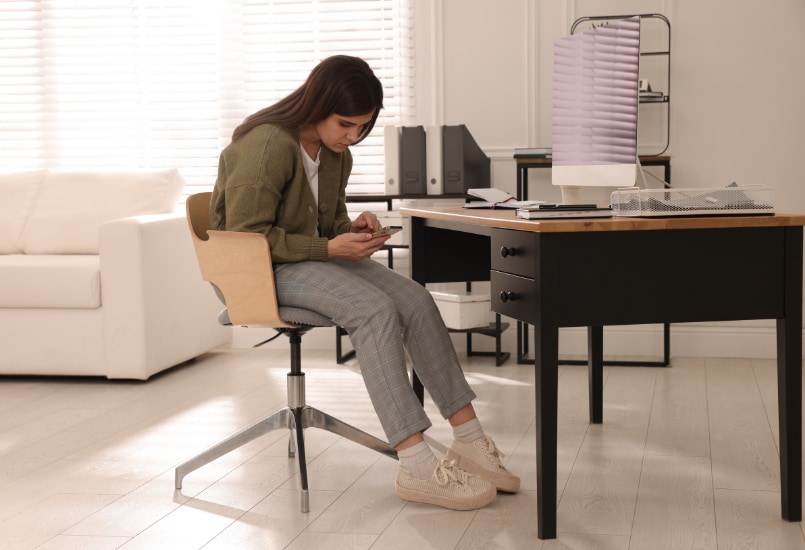
The scariest ghost in your home office isn't supernatural. It is the eerie crunch your lower back seems to make every afternoon at 3:00 PM. Your shoulders ache, your neck stiffens, and the project that should take an hour suddenly feels impossible. Meanwhile, your inbox keeps growing, deadlines creep closer, and your paycheck remains stubbornly unchanged.
A cheap office chair might save you money today, but an uncomfortable workstation can cost you through medical expenses, lost productivity, and physical exhaustion. Poor posture rarely sends a bill immediately. Instead, its costs accumulate quietly until discomfort becomes part of your daily routine. For remote workers, freelancers, and desk-bound professionals, investing in ergonomic office furniture is not simply about comfort. It is about protecting your health, time, and earning potential.
--altImgStart--{"link":"https://s3.springbeetle.com/prod-us2-bucket/manhavingneckmassage_20261026_FNSE6BUr.png","alt":"man having neck massage"}--altImgEnd--
The Hidden Postural Tax on Your Paycheck
The financial consequences of poor posture often begin with small expenses. An occasional pain reliever becomes a weekly purchase. A stiff neck prompts a massage appointment, followed by physical therapy sessions when the discomfort refuses to disappear. Depending on your location, insurance coverage, and treatment needs, these costs can quickly reach hundreds or even thousands of dollars annually.
Compare those recurring expenses with purchasing a supportive ergonomic chair. Although quality models can require a substantial upfront investment, the right chair may help reduce discomfort and support healthier sitting habits. Spending $300 to $600 once could be more economical than repeatedly paying to manage preventable workplace strain. However, no chair guarantees freedom from pain, and persistent symptoms deserve professional medical attention.
The financial damage extends beyond treatment. When your back hurts, concentrating becomes harder, breaks become longer, and finishing assignments takes more effort. Freelancers might miss billable hours, while employees may struggle to meet demanding targets. Pain can also affect sleep and mood, making recovery more difficult. These consequences vary between individuals, but the principle remains clear: workplace discomfort can quietly interfere with your ability to earn.
Brain Fog and the Afternoon Zombie Slump
Ever notice how your sharpest ideas seem to disappear after lunch? Your desk setup might contribute to the problem. Sitting in an awkward position for hours can create muscle fatigue, discomfort, and tension that compete for your attention. Slouching may also restrict comfortable breathing, particularly when your torso is compressed. However, afternoon brain fog has several possible causes, including poor sleep, dehydration, heavy meals, and inadequate movement.
An uncomfortable chair introduces another productivity problem: constant adjustment. You shift your hips, straighten your back, pull at the seat cushion, and move your monitor for the fifth time. Each interruption seems insignificant, but repeatedly breaking concentration can make demanding tasks harder to complete. Your brain must keep redirecting attention toward physical discomfort instead of the work itself.
Consider spending 30 seconds adjusting your position every 10 minutes. Across an eight-hour workday, those interruptions total 24 minutes. Over five days, that becomes two hours. Not every adjustment represents wasted time, since movement is healthy, but discomfort-driven interruptions can be reduced through better workstation design. A supportive chair and properly positioned monitor help make comfortable work easier, allowing you to reserve your attention for clients, creative projects, and important decisions.
--altImgStart--{"link":"https://s3.springbeetle.com/prod-us2-bucket/FlexiSpotStandardErgoOfficeChairC4_20261026_p9h4f0ar.png","alt":"FlexiSpot Standard Ergo Office Chair C4"}--altImgEnd--
The Ergonomic Exorcism: Furniture That Works for You
Start with your chair. An adjustable ergonomic office chair should support your lower back, allow your feet to rest comfortably, and keep your hips and knees in a position that feels natural. Adjustability matters because bodies differ, and a chair that suits one person may frustrate another. The FlexiSpot Standard Ergo Office Chair C4 offers mesh and foam seat options to accommodate different comfort preferences.
Its breathable mesh encourages airflow, while the W-shaped foam seat is designed to provide cushioning around the hips. The C4 also offers adjustable relaxation through a 135-degree recline and a retractable footrest. These features can make breaks more comfortable without requiring you to leave your workspace. Available colors include soft beige, elegant gray, fresh green, and classic black, making it easier to coordinate comfort with your office design.
Next, consider a motorized standing desk. Alternating between sitting and standing allows you to change positions throughout the day rather than remaining stationary for hours. Standing continuously is not the answer, either. The goal is regular movement and comfortable variation. An adjustable desk makes these transitions convenient, particularly during long meetings or afternoon work sessions. Pair it with a monitor arm or laptop stand to bring your screen closer to eye level, helping reduce the need to bend your neck repeatedly.
Calculate the Return on Your Ergonomic Investment
Ergonomic furniture becomes easier to justify when you evaluate its potential return. Suppose a standing desk costs $600 and helps you recover 15 minutes of productive time each workday. Across 22 working days, that equals 5.5 hours monthly. If your work generates $50 per productive hour, those hours represent $275 in potential economic value.
Under these assumptions, the desk's purchase price equals approximately 2.2 months of that value. However, this is an illustration, not a guaranteed financial return. Recovered time creates income only when it translates into additional billable work, completed projects, or measurable business value. The calculation also excludes installation, maintenance, and other expenses.
You can assess your own ergonomic return by tracking discomfort, interruptions, completed assignments, and working hours before and after upgrading. Start with the equipment that addresses your biggest problem instead of purchasing everything immediately. A supportive chair might deserve priority if sitting causes persistent discomfort. A monitor stand could be a more affordable first step if your neck constantly bends toward a laptop. Small, thoughtful improvements can deliver meaningful benefits without straining your budget.
--altImgStart--{"link":"https://s3.springbeetle.com/prod-us2-bucket/threecoworkerssmilingwhilewalking_20261026_aVxiyDAo.png","alt":"three coworkers smiling while walking"}--altImgEnd--
Protect Your Career Before Burnout Sets In
A successful career requires more than intelligence, ambition, and a reliable internet connection. It also requires enough physical stamina to sustain demanding schedules without feeling exhausted every afternoon. Remote professionals often overlook this reality because their home offices appear convenient. Yet working from home can blur boundaries between professional responsibilities and personal recovery, encouraging long periods of sitting with few meaningful breaks.
Building an ergonomic workspace supports healthier habits, but furniture alone cannot prevent burnout or eliminate workplace injuries. Regular movement, adequate sleep, sensible workloads, and appropriate medical care remain important. Schedule short movement breaks, adjust your workstation to fit your body, and pay attention when discomfort repeatedly interrupts your day.
Think of your office setup as an investment in your working life. Every improvement should make your environment more supportive, comfortable, and practical. You do not need the most expensive desk or the trendiest chair. You need equipment that fits your body, your tasks, and your budget.
Save the horror stories for Halloween. Your home office should not feel like a Victorian torture chamber, and your paycheck should not quietly absorb the cost of an uncomfortable workspace. Start by improving your chair, desk height, or screen position, then build from there. Consider an adjustable standing desk and an ergonomic chair such as the FlexiSpot C4 to create a workspace designed around your needs. Protect your posture, reclaim your focus, and give your earning potential room to grow.