
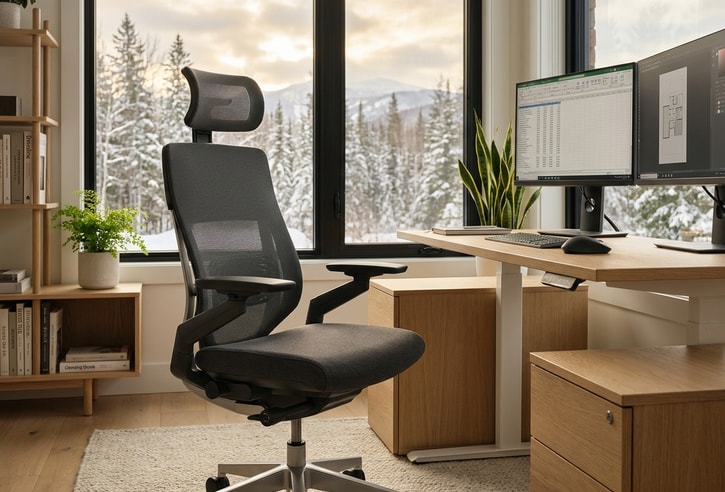
Most office chairs feel extremely comfortable at first.
In a showroom, or even during the first hour of work, many chairs seem supportive enough. But the real test begins much later, usually after three to five hours of continuous sitting.
That is when subtle discomfort starts to appear. The lower back begins to feel tired. Pressure builds under the thighs. You shift positions more often without noticing. Focus slowly declines.
For people working 8 to 10 hours a day at a desk, short-term softness is not a reliable indicator of comfort. What matters more is how a chair distributes pressure, supports spinal alignment, and performs under long-duration use.
This guide breaks down the best office chairs for sitting all day in Canada (2026), focusing on how different seat structures and support systems behave over long working hours.
Quick Comparison: Best Office Chairs for Long Hours in Canada
| Chair Model | Best For | Seat Construction | Key Strength |
| FlexiSpot C7 Max | Long 8–10+ hour sitting sessions | High-density foam + latex comfort layer | Balanced pressure distribution for long sitting |
| FlexiSpot C7 Morpher | Lower back sensitivity and posture variability | Foam cushion + adaptive lumbar system | Dynamic lumbar support during movement |
| FlexiSpot C7 | Entry-level ergonomic upgrade | High-resilience molded foam | Solid ergonomic baseline for daily work |
How to Choose an Office Chair for 8–10 Hour Sitting
--altImgStart--{"link":"https://s3.springbeetle.top/prod-common-bucket/commodity/item/1028_file_how-to-choose-office-chair-long-hours_20260623_7SoSDvyc.png","alt":"infographic showing pressure relief lumbar support and breathability factors in office chair selection."}--altImgEnd--
Before comparing models, it helps to understand what actually changes during long sitting sessions. Three factors matter most:
1. Pressure Distribution
Seats that are too soft may compress over time, increasing pressure on the tailbone and thighs. Seats that are too firm may create localized pressure points.
2. Lumbar Behavior
Static lumbar support keeps your spine in one position. Adaptive systems adjust as you shift posture, which may reduce fatigue during long sessions.
3. Heat and Movement
Mesh improves airflow, while foam and hybrid cushions tend to retain more heat but offer different pressure comfort.
The Takeaway: There is no single "best" material, only better matches for different work styles.
Who This Guide Is NOT For
This guide is primarily intended for people who spend long stretches of time at a desk, often 7 to 10+ hours per day.
If your work sessions are shorter, a chair with a well-designed mesh seat and backrest may be all you need. Quality mesh provides consistent support, promotes airflow, and can help maintain a more upright sitting posture without relying on thick cushioning.
For occasional office work, comfort often comes down to proper adjustability and support rather than advanced pressure-relief technologies designed for marathon sitting sessions.
What Most Buyers Misunderstand About "Comfortable Chairs"
A common assumption is that a softer chair automatically means better comfort.
In reality, very soft seating can reduce structural support over long periods. As the cushion compresses, the pelvis may tilt backward slightly, which can increase strain on the lower back muscles over time. However, overly firm seating is also not ideal, as it can create concentrated pressure under the sit bones.
For long-duration work, the goal is balance:
Moderate Firmness + Adaptive Surface Comfort + Stable Lumbar Support
Seat Material Breakdown: Mesh vs Foam vs Hybrid
--altImgStart--{"link":"https://s3.springbeetle.top/prod-common-bucket/commodity/item/1028_file_mesh-vs-foam-vs-hybrid-office-chair_20260623_L1DO1Gz5.png","alt":"comparison of mesh foam and hybrid office chair seat materials for long sitting comfort."}--altImgEnd--
1. Full Mesh Chairs: Breathable but Firm
Mesh chairs are known for airflow and a lightweight feel. They tend to encourage upright posture due to their tension-based structure.
However, because mesh is fully suspended, long sitting sessions may feel firm. Some users may also experience pressure at the edge of the seat frame depending on body type and sitting posture.
- Best for: warm environments, frequent posture changes, shorter sitting intervals
2. Foam Cushions: Comfortable but Variable Over Time
Foam seats provide a softer initial feel and better pressure absorption. The key limitation is long-term compression behavior. Lower-density foam may lose resilience over time, which can reduce support consistency during long work sessions.
- Best for: users who prefer a cushioned feel and stable sitting posture
3. Foam + Latex Hybrid: Balanced Long-Hour Solution
Hybrid cushions combine a supportive foam base with a more responsive top layer. This design aims to balance structure and comfort: the base maintains alignment while the top layer adapts to body pressure and reduces localized discomfort.
- Best for: 8–10+ hour continuous desk work
Best Office Chairs for Sitting All Day in Canada (2026)
FlexiSpot C7 Max – Best Overall for Long Sitting Hours
The C7 Max is designed for extended daily use where comfort consistency matters more than short-term softness. It uses a hybrid cushion system that combines structural foam support with a more responsive comfort layer. This helps distribute pressure more evenly during long sitting sessions.
Unlike traditional foam-only seats, the hybrid design reduces the likelihood of deep compression over time. Compared to full mesh seats, it offers a softer surface feel with less localized pressure under the thighs.
- Best for: remote professionals working 8–10+ hours per day who prioritize pressure relief
- Potential limitation: slightly warmer feel than full mesh in high-temperature environments
--altImgStart--{"link":"https://s3.springbeetle.top/prod-common-bucket/commodity/item/1028_file_foam-cushion-with-latex-layer-exploded-view_20260623_3oqmzybA.png","alt":"Exploded view diagram of foam cushion with latex layer, showing 5 layers: elastic fabric, composite foam, latex cotton, non-woven fabric, and memory foam for ultimate comfort."}--altImgEnd--
FlexiSpot C7 Morpher – Best for Adaptive Lumbar Support
The C7 Morpher focuses on dynamic lumbar support that adjusts during movement. Instead of relying on a fixed lumbar pad, the system responds to changes in posture, such as leaning forward or reclining. This may help maintain more consistent lower back support throughout the day.
The trade-off is mechanical complexity and a higher price tier compared to simpler ergonomic chairs.
- Best for: users with lower back sensitivity or those who frequently shift positions
- Potential limitation: more complex mechanism and premium pricing
--altImgStart--{"link":"https://s3.springbeetle.top/prod-common-bucket/commodity/item/1028_file_airlumbar-lumbar-support-inflation-technology_20260623_zZGp7a8F.png","alt":"Ergonomic office chair with AirLumbar lumbar support tech, featuring dual inflation bladders for cradling lower back and easing sacral pressure."}--altImgEnd--
FlexiSpot C7 – Best Entry-Level Ergonomic Chair
The standard C7 provides a solid introduction to ergonomic seating. It includes essential features such as adjustable lumbar support, seat depth adjustment, and a structured foam seat cushion. While it does not include advanced hybrid materials or adaptive lumbar systems, it covers the basics needed for daily desk work.
- Best for: budget-conscious users or first-time ergonomic chair buyers
- Potential limitation: fewer advanced comfort systems for long 8–10 hour use
--altImgStart--{"link":"https://s3.springbeetle.top/prod-common-bucket/commodity/item/1028_file_adaptive-dynamic-lumbar-support-flexispot-c7-vs-others_20260623_IqA9T6uW.png","alt":"Comparison of FlexiSpot C7 vs others: Adaptive dynamic lumbar support moves with you, offering forward and backward adjustable ergonomic targeted sacral support."}--altImgEnd--
Practical Rules for Long Sitting Comfort
Even the best ergonomic chair works best when paired with healthy movement habits.
- Maintain Neutral Joint Alignment: Aim for feet flat on the floor, with knees and hips roughly aligned. This helps reduce unnecessary joint strain.
- Use Recline Function Periodically: Remaining in a fixed upright position for hours may increase fatigue. Occasional reclining can help redistribute upper body load.
- Adjust Seat Depth Properly: Keep a small gap between the seat edge and the back of your knees to avoid pressure buildup.
- Take Regular Movement Breaks: Standing or stretching every 30–60 minutes helps maintain circulation and reduce stiffness.
Frequently Asked Questions
1. What is the best office chair for sitting 8 hours a day in Canada?
For most users working long hours, a chair that balances pressure distribution and lumbar support performs best. Hybrid seat designs such as the C7 Max are often preferred for extended sitting due to their balanced cushioning and structural support.
2. Is mesh or foam better for long hours?
Mesh offers better airflow and posture guidance, while foam provides more cushioning. For 8–10 hour use, hybrid designs often offer a balance between both.
3. Why do I feel discomfort even in ergonomic chairs?
Discomfort can come from multiple factors, including incorrect seat height, insufficient movement, or mismatch between seat firmness and body weight distribution. Even high-quality chairs require proper adjustment.
4. Are expensive ergonomic chairs worth it?
Higher-priced chairs often provide better materials, adjustability, and long-term durability. However, the benefit depends on usage time. For long daily sitting, investment in adjustability and support systems is more meaningful than aesthetics.