
_20260409_UNs4907O.PNG)
Back pain doesn't hit all at once. You sit down feeling fine, answer a few emails, maybe get through a meeting or two. A few hours later, your lower back starts to feel tight. That points to one thing: your chair isn't supporting you the way you think it is.
The best ergonomic office chairs for back pain don't just feel good at first. They still feel right later, when your posture starts slipping and your body gets tired.
It comes down to how well the chair handles adjustable lumbar support, movement, and overall fit.
Quick Picks (If You Just Want the Short Answer)
- C7 — a safe choice for everyday support without overthinking adjustments
- C7 Max — noticeably better if you sit for long, uninterrupted hours
- C7 Morpher — stands out if you tend to move, lean, or shift often
If you've tried a few ergonomic chairs and nothing stuck, it's usually not about the category. It's how the chair holds up after a few hours.
Who This Actually Works For
This guide will be useful if:
- Your lower back feels fine in the morning but worse by mid-afternoon
- You've adjusted your chair before, but it never quite feels right
- You're comparing ergonomic chairs with adjustable lumbar support and the differences aren't obvious
- You spend most of your day sitting, even if you take short breaks
If you sit only occasionally, almost any chair will feel comfortable. Differences show up once you stop thinking about the chair and just keep working.
What Makes Some Chairs Better for Back Pain
Many chairs check the same boxes on paper. In real life, a few things start to separate them.
1. Lumbar Support You Can Actually Dial In
Most people don't sit perfectly upright all day. You lean forward, shift, relax back without noticing.
If the lumbar support stays fixed, it quickly stops lining up with your spine. That's where adjustable lumbar support matters. Being able to move it closer or further sounds small. It really isn't.
When it's set right, your lower back feels supported without pressure. When it's even slightly off, you end up adjusting yourself instead of the chair.
2. Movement That Feels Effortless
A chair can offer solid support and still feel uncomfortable if movement feels stiff.
What matters is whether the chair lets you lean back, shift your weight, or tweak angles without thinking. Some chairs technically recline but feel stiff. You end up stuck in one position longer than you should.
Better chairs make these small movements feel almost invisible. That's a good sign.
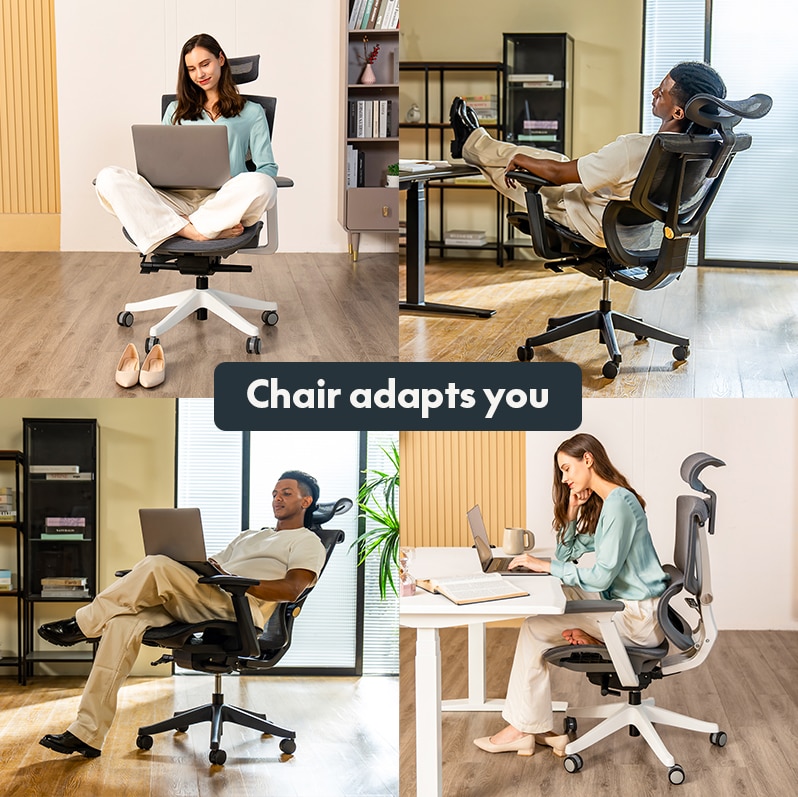
3. Fit That Doesn't Fight Your Body
Even a well-designed chair can feel off if the seat is too deep, the lumbar hits too high, or the backrest doesn't follow your upper back. At first, it's subtle. After a full day, it adds up.
Chairs with real adjustability reduce the need to adapt yourself. Instead of specs, watch what happens after a few hours:
- Does lumbar support still feel aligned?
- Do you start shifting to get comfortable?
- Does pressure build under your thighs or lower back?
This is where differences become obvious.
The Chairs, Explained in Real Use
C7: Where Most People Should Start
The C7 keeps it simple. The lumbar support moves forward and back, and once set, it stays consistent. You're not chasing a "right position" all day.
For most people, that's enough. It covers the basics without extra complexity you may never use.
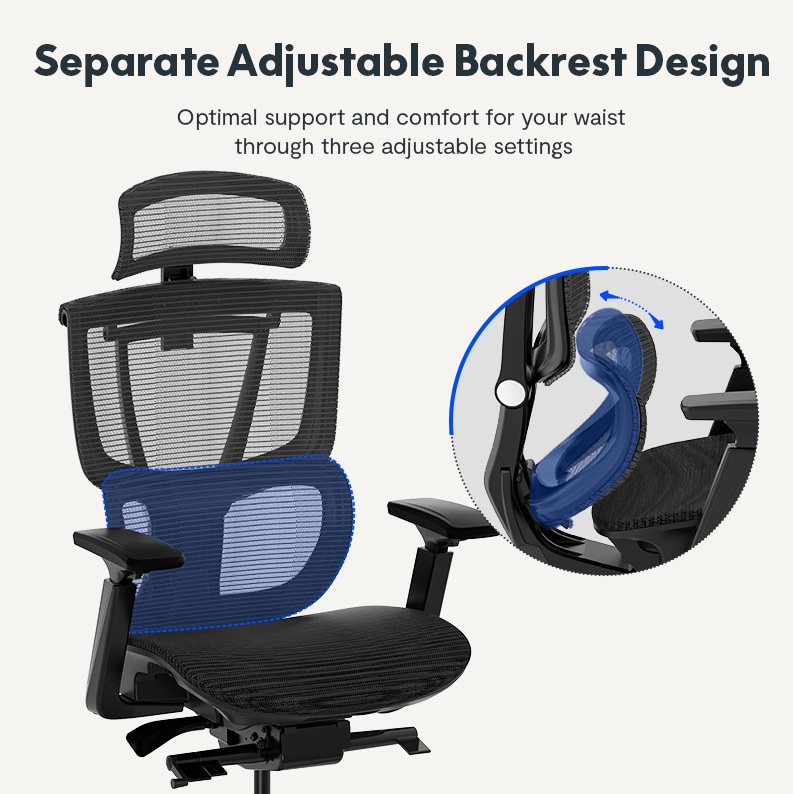
C7 Max: When You Sit Longer Than You Planned
You probably didn't plan to sit eight hours straight, but it happens.
The C7 Max has more give thanks to layered foam and latex, which reduces pressure buildup. You might not notice it at first, but after a few hours, you realize you're not constantly shifting to stay comfortable.
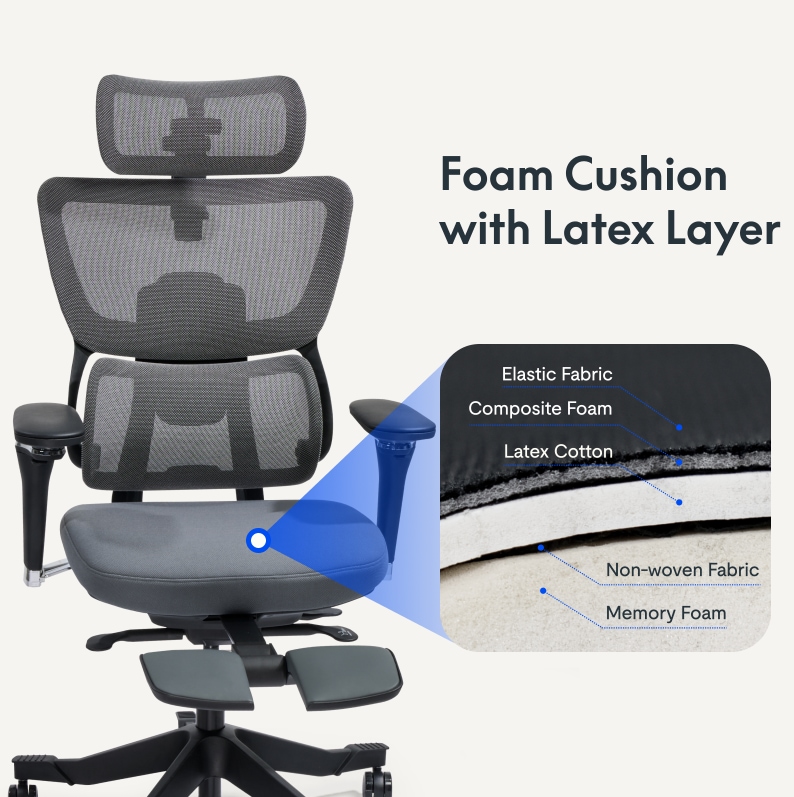
C7 Morpher: If You Don't Sit Still
Some people naturally move while working. Fixed support can feel restrictive.
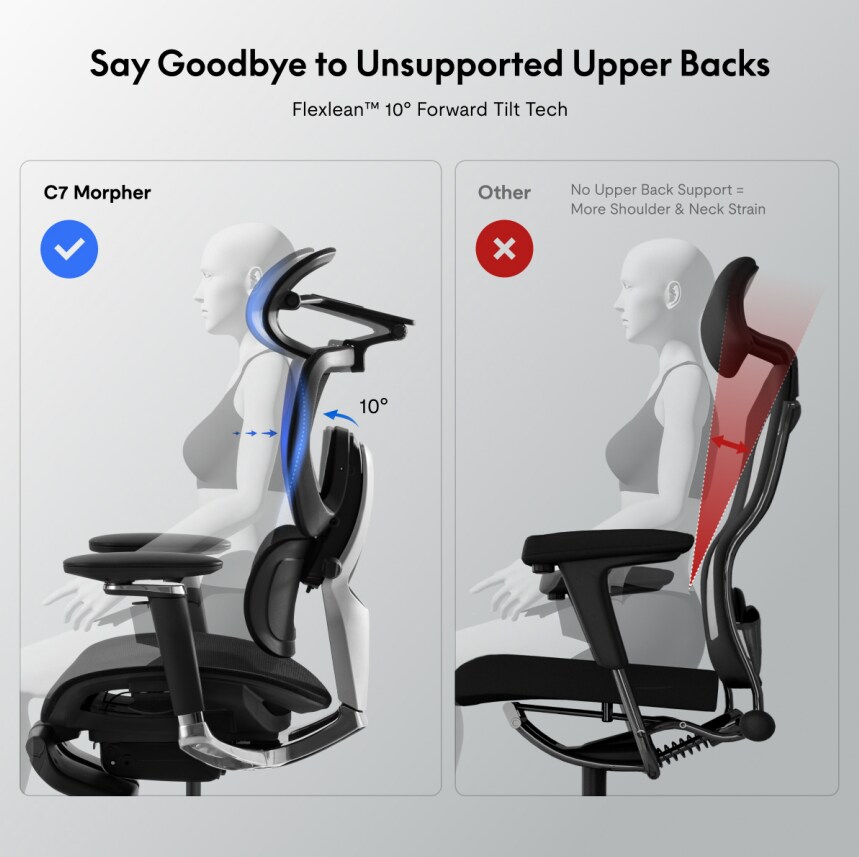
The C7 Morpher's lumbar system responds as you move, and the backrest follows along. It tilts forward slightly, which helps when leaning in to focus, a position where other chairs often lose support.
What People Notice After Switching
After using different chairs for a few days, patterns emerge.
A common comment: the chair feels fine at first, but the real difference shows up later. Less shifting, fewer moments you feel the need to stretch or stand just to reset your back.
Some chairs need trial and error to get lumbar position right. Once it clicks, it fades into the background.
There's a noticeable difference between chairs that encourage movement and those that don't. People often didn't realize how static their previous chair felt until they switched.
Not every reaction is positive at first. Strong lumbar support can feel unfamiliar, especially if you're used to softer chairs. That adjustment period is normal.
Over time, feedback converges. The best chairs aren't the ones that feel dramatically different in the first few minutes. They're the ones that hold up quietly through a full day.
Here's how they compare side by side:
| Model | Lumbar Support | Feel Over Time | Best Fit |
| C7 | Adjustable depth | Stable, predictable | Daily work |
| C7 Max | Adaptive | Holds up over long hours | Extended sitting |
| C7 Morpher | Air-assisted | Moves with you | Active users |
How They Compare to Premium Chairs in Canada
High-end names like Herman Miller, Steelcase, or Humanscale are well-built, refined, and come with long warranties.
But in daily use, the biggest difference isn't back support. A well-designed chair already delivers that. High-end pricing buys durability, materials, and finer adjustments, not necessarily better support. For many, the extra refinement is nice but not essential.
Choosing Without Overthinking It
Keep it simple:
- Pick a chair with easy lumbar adjustment
- Make sure recline feels effortless
- Notice how the seat feels after a couple of hours
This usually matters more than comparing spec sheets.
Common Mistakes
Choosing based on first impressions
Soft at first doesn't mean it holds up later.
Ignoring lumbar adjustability
Fixed support may not match your body.
Staying still too long
Even the best chair can't fix static posture.
Overvaluing branding
Mid-range chairs that fit you often beat premium chairs that don't.
Giving up too soon
Some chairs take a few days to dial in. Patience matters more than switching too quickly.
One Thing That Helps More Than Any Chair
Even the best chair has limits.
Switching between sitting and standing reduces strain in ways no chair can fully replace. If back pain is a consistent issue, your overall setup matters as much as the chair.
Frequently Asked Questions
1. What’s the best ergonomic chair for lower back pain?
It depends on how you sit. For everyday use, the C7 provides self-adaptive lumbar support. For long hours, the C7 Max adds layered foam and latex for pressure relief. For those who shift positions often, the C7 Morpher’s air-assisted lumbar is the most responsive option.
2. How much recline do I need in an ergonomic chair?
Around 110° works for most daily tasks. A recline of 120° to 130° is helpful for longer sessions. Leaning back at these angles lets the chair’s backrest take more of your body weight off your lower back, improving blood flow and reducing muscle fatigue.
3. How do I choose between the C7, C7 Max, and C7 Morpher?
Choose the C7 for standard daily use. Choose the C7 Max if you sit for extended hours and want more cushioning. Choose the C7 Morpher if you tend to lean forward or shift positions often — its forward‑tilt function helps maintain better spinal alignment.
4. Is mesh or foam better for back pain?
Mesh stays cooler and breathes better, which helps during long hours. Foam feels softer at first but may compress over time. For back pain, the quality of the lumbar adjustability matters more than the seat material itself.
5. Can an ergonomic chair fix existing back pain?
No, but it helps prevent and manage it. A good chair corrects your posture and reduces daily strain on your lumbar discs. For best results, pair it with regular movement and a sit‑stand desk.
6. How long should a high-quality ergonomic chair last?
A well-built ergonomic chair can last up to 10 years with regular use. Lifespan depends on the durability of the gas lift, the quality of the mesh or foam, and the frame construction.
Final Thoughts
Most ergonomic chairs look convincing at first glance.
The real test comes later, when you've stopped thinking about it. If it still feels right, you've probably made the right call.