
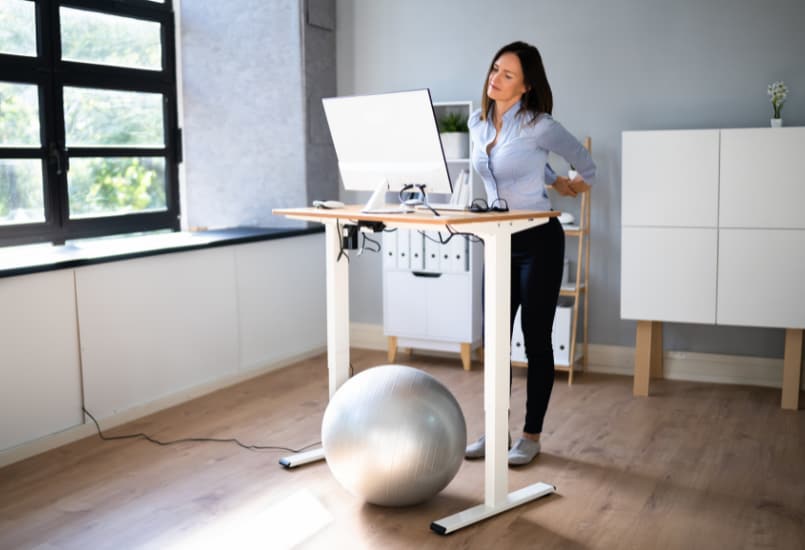
The standing desk changed the way many people think about work. Not long ago, spending an entire day sitting at a desk felt completely normal. Today, we know that staying in one position for hours is not the healthiest way to spend a workday. Research continues to show that long periods of sitting are linked to higher risks of obesity, heart disease, type 2 diabetes, poor circulation, and other long-term health concerns. That growing awareness has encouraged people to stand more, stretch more, and move more throughout the day.
Still, a standing desk is not a challenge to see how long you can stay on your feet. It is not about replacing one extreme with another. Standing all day can create its own problems, including sore feet, tired legs, lower back discomfort, and joint strain. The real goal is movement. Your body was designed to change positions, not remain frozen in one.
That raises an important question. How long should you actually stand while using a standing desk? The answer is more personal than many people expect. Your age, fitness level, work style, and overall health all influence what feels comfortable and sustainable. Instead of chasing a perfect number, it helps to understand the principles behind healthy desk habits. Once you do, your standing desk becomes more than a piece of furniture. It becomes a tool that helps you stay energized, focused, and comfortable from morning until the end of the workday.

Why Standing All Day Is Not the Goal
Standing desks became popular because they offer an easy way to reduce long hours of sitting, but that does not mean standing without breaks is the healthier choice. Your muscles, joints, and circulation all benefit from variety. They work best when you alternate between sitting, standing, stretching, and walking throughout the day.
Many ergonomic specialists recommend aiming to stand for about 30 minutes during each working hour. Think of it as creating a rhythm instead of following a strict schedule. Some hours you may stand longer because you feel energized. Other hours, especially during focused writing or detailed work, sitting may feel more comfortable. That flexibility is perfectly normal.
If you are new to standing desks, avoid making dramatic changes on the first day. Standing for several hours without experience often leads to sore feet, aching calves, and unnecessary fatigue. Instead, begin with short standing sessions of about 10 to 15 minutes. As your body adapts over several weeks, gradually increase your standing time until it feels natural.
Your body is constantly giving you useful information. If your feet become sore, your lower back tightens, or your knees begin to ache, those are signs that your muscles need a different position. Sitting down for a while is not giving up. It is simply responding to what your body needs.
Desk setup also matters just as much as standing time. Your elbows should stay close to a 90-degree angle while typing. The top of your monitor should sit around eye level to reduce neck strain. Your shoulders should remain relaxed instead of lifted toward your ears. Small adjustments like these often make a much bigger difference than standing for an extra fifteen minutes.
Movement is the missing piece many people overlook. Even while standing, avoid locking your knees or staying completely still. Shift your weight from one foot to the other. Stretch your shoulders. Roll your ankles. Take a short walk to refill your water bottle or simply clear your mind. These tiny moments of movement help improve circulation and reduce stiffness.
The healthiest workday is not measured by how many hours you spend standing. It is measured by how often you change positions and keep your body moving.

Finding the Right Standing Routine for Your Body
No two people work exactly the same way, which is why the perfect standing schedule does not exist. Someone who spends the day answering emails may find it easy to stand for longer periods, while a graphic designer working on detailed edits may naturally prefer sitting during highly focused tasks. The key is creating a routine that supports both comfort and productivity.
Your overall health also plays an important role. People with knee pain, varicose veins, lower back conditions, or circulation issues may need shorter standing sessions and more frequent breaks. If you have existing medical concerns, it is always wise to discuss major workstation changes with your healthcare provider before making standing a large part of your daily routine.
Energy levels can also guide your schedule. Many people notice they feel more alert while standing during the morning or immediately after lunch. These moments are often ideal for standing meetings, responding to messages, or completing lighter tasks. Sitting may feel more comfortable during deep concentration or creative work that requires long periods of focus.
It also helps to remember that standing desks are only one part of a healthy workday. Walking for a few minutes every hour, climbing stairs, stretching your hips, and staying hydrated all contribute to better movement. Even the healthiest desk cannot replace regular physical activity outside your office.
Footwear deserves more attention than it usually gets. Hard floors can quickly make standing uncomfortable, especially if you are wearing thin shoes or standing barefoot. Supportive footwear reduces pressure on your joints and helps you stay comfortable longer. Small details like this often determine whether your standing routine becomes a lasting habit or something you abandon after a few weeks.
Pay attention to patterns rather than isolated moments. One uncomfortable afternoon does not mean standing desks are not right for you. Likewise, one energetic morning does not mean you should stand all day. Give yourself time to experiment. Adjust your schedule, observe how your body responds, and continue refining your routine until it feels balanced.
The most successful standing desk users are not following rigid rules. They simply stay aware of how their bodies feel and respond before discomfort becomes pain.

Build a Workspace That Makes Movement Feel Natural
Healthy work habits become much easier when your workspace supports them. A standing desk should encourage smooth transitions instead of making adjustments feel like another task on your to-do list. That is one reason height-adjustable desks have become so popular. With the press of a button, you can shift from sitting to standing within seconds, making movement part of your normal routine instead of an interruption.
FlexiSpot standing desks are designed with exactly that purpose in mind. Their smooth electric height adjustment allows you to change positions whenever your body asks for it, helping you create a healthier rhythm throughout the day. Built with sturdy materials and clean, modern designs, they fit naturally into home offices as well as professional workspaces while providing reliable support for years of daily use.
Comfort extends beyond the desk itself. If you spend part of your day standing, an anti-fatigue mat can significantly reduce pressure on your feet and legs. The FlexiSpot Standing Desk Anti-Fatigue Mat MT1 provides a cushioned surface that encourages gentle movement while reducing fatigue during longer standing sessions. Its non-slip design helps keep the mat securely in place, while its beveled edges create smooth transitions that reduce the chance of tripping. The durable surface is also easy to clean, making it practical for everyday use.
Simple habits can make an even bigger difference than expensive equipment. Stretch once every hour. Roll your shoulders between meetings. Shift your weight while reading documents. Walk across the room while taking phone calls. Refill your water bottle instead of keeping a large container beside your desk all day. These small actions prevent your body from becoming locked into one position.
Healthy work is not about chasing perfect posture every minute. It is about creating an environment that reminds you to keep moving. Your desk becomes less of a destination and more of a place you pass through as your body naturally changes positions throughout the day.
A standing desk is one of the easiest ways to support better health, but balance remains the true goal. Sitting less matters. Standing more helps. Moving often makes the biggest difference of all. When you listen to your body, adjust your routine with patience, and create a workspace that encourages regular movement, every workday feels lighter, more comfortable, and easier to enjoy.